Recently, the team led by Professor Xiao
Hong from the Department of Pain Management at West China Hospital successfully
performed a temporary spinal cord stimulation (t-SCS) implantation procedure on
Mr. T (pseudonym), an American who had suffered from "Failed Back Surgery
Syndrome" (FBSS) for over 20 years. The patient experienced significant
pain relief post-surgery, with substantial improvements in sleep and daily
activities, leading to a qualitative enhancement in his quality of life. This
successful diagnosis and treatment not only demonstrated our hospital's
international standards in the field of chronic intractable pain management but
also builds a bridge for medical and health exchanges between China and foreign
countries through concrete action.
Mr. T, now 58 years old, underwent multiple
surgeries in the United States over 20 years ago for a lower back condition.
Post-surgery, he gradually developed bilateral pain and numbness in his lower
back and legs, with symptoms progressively worsening, leading to a diagnosis of
FBSS. Over the years, he consulted various medical institutions and tried
multiple interventions, including medication, nerve blocks, and radiofrequency
therapy, but pain relief was unsatisfactory. His pain score remained
persistently high at 7-8 (on a scale of 10), severely impacting his daily
activities and nighttime sleep. After unsuccessful attempts to seek treatment
elsewhere, Mr. T learned about the outstanding expertise of the West China Hospital
Pain Management Department in managing refractory pain and traveled
specifically across the ocean to Chengdu seeking systematic treatment.
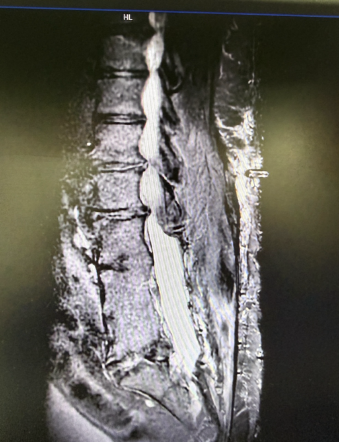
Patient's Preoperative MRI
Upon admission, the Pain Management team
conducted a comprehensive and systematic evaluation of the patient. Integrating
his medical history, clinical manifestations, and imaging findings, they
organized a multidisciplinary consultation and discussion. The team identified
significant anatomical abnormalities in the surgical area, including
postoperative scar adhesions and severe spinal canal stenosis, which
substantially increased the technical difficulty and procedural risks of
electrode placement. After repeated discussions within the multidisciplinary
team and fully informing the patient of the treatment plan, it was decided to
use temporary spinal cord stimulation as a means for efficacy testing and
safety assessment. Based on the subsequent analgesic effect and tolerance, a
careful evaluation would be made regarding the implantation of a permanent
stimulation system. Consequently, a detailed, individualized surgical plan was
formulated.
The surgery was performed under DSA
(Digital Subtraction Angiography) guidance. Under the direction of Chief
Physician Xiao Hong, the surgical team, consisting of Nurse Yin Yan and
Research Assistant Lu Fan, precisely delivered the electrode to the corresponding
segment of the patient's epidural space and completed intraoperative
stimulation parameter adjustments. Mr. T immediately reported that the coverage
area of the electrical stimulation highly coincided with his pain region,
experiencing an immediate analgesic effect. The surgical procedure was
completed smoothly.
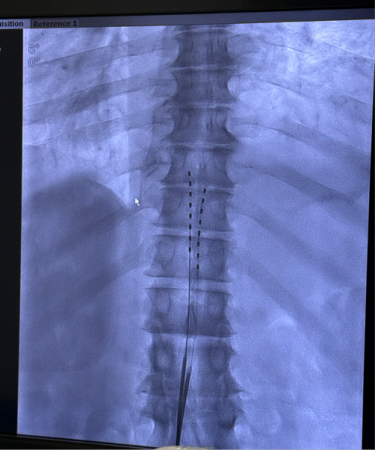
Electrode Successfully Implanted
Postoperatively, a management team
comprising Dr. Zeng Xianzheng, device engineers, and nursing staff provided
continuous follow-up. Based on Mr. T's daily pain fluctuations, they
meticulously optimized parameters such as stimulation intensity, pulse width,
and frequency, ensuring the analgesic maintained optimal pain control.
Remarkably, on the second postoperative day, Mr. T was able to discontinue the
intravenous patient-controlled analgesia pump. The pain in his lower back and
both legs was significantly alleviated; he enjoyed a restful night's sleep for
the first time in a long while, and his ability to perform daily activities
gradually recovered. "I tried many treatment methods in the US before, but
the results were never satisfactory. I never expected to receive such
systematic treatment here at the West China Hospital Pain Management
Department," Mr. T exclaimed, full of praise for the treatment outcome.
Upon departure, he gave the medical team a thumbs-up and repeatedly expressed
his gratitude, thanking them for bringing him "a long-lost sense of ease
and peace of mind."
Spinal cord stimulation, recognized
internationally as a crucial treatment for refractory neuropathic pain, offers
significant advantages such as being minimally invasive, reversible, and
adjustable. Temporary spinal cord stimulation eliminates the need for
implanting a permanent pulse generator, providing phased pain relief through a
temporary electrode. This not only helps patients achieve rapid pain relief but
also serves as an important basis for assessing suitability for long-term
implant therapy. Compared to medication alone, this technology helps enhance
analgesic efficacy while reducing analgesic consumption, thereby lowering the
risk of drug-related adverse reactions, offering a safer and more effective
treatment option for patients with intractable pain.
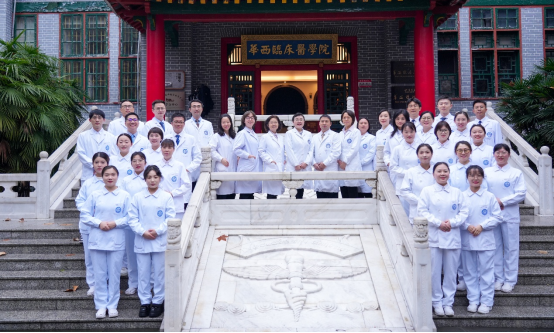
Since the Department of Pain Management at
our hospital introduced this technology in 2022, it has completed over 170
related treatments, accumulating extensive experience in the standardized
diagnosis, treatment, and individualized management of refractory neuropathic
pain.